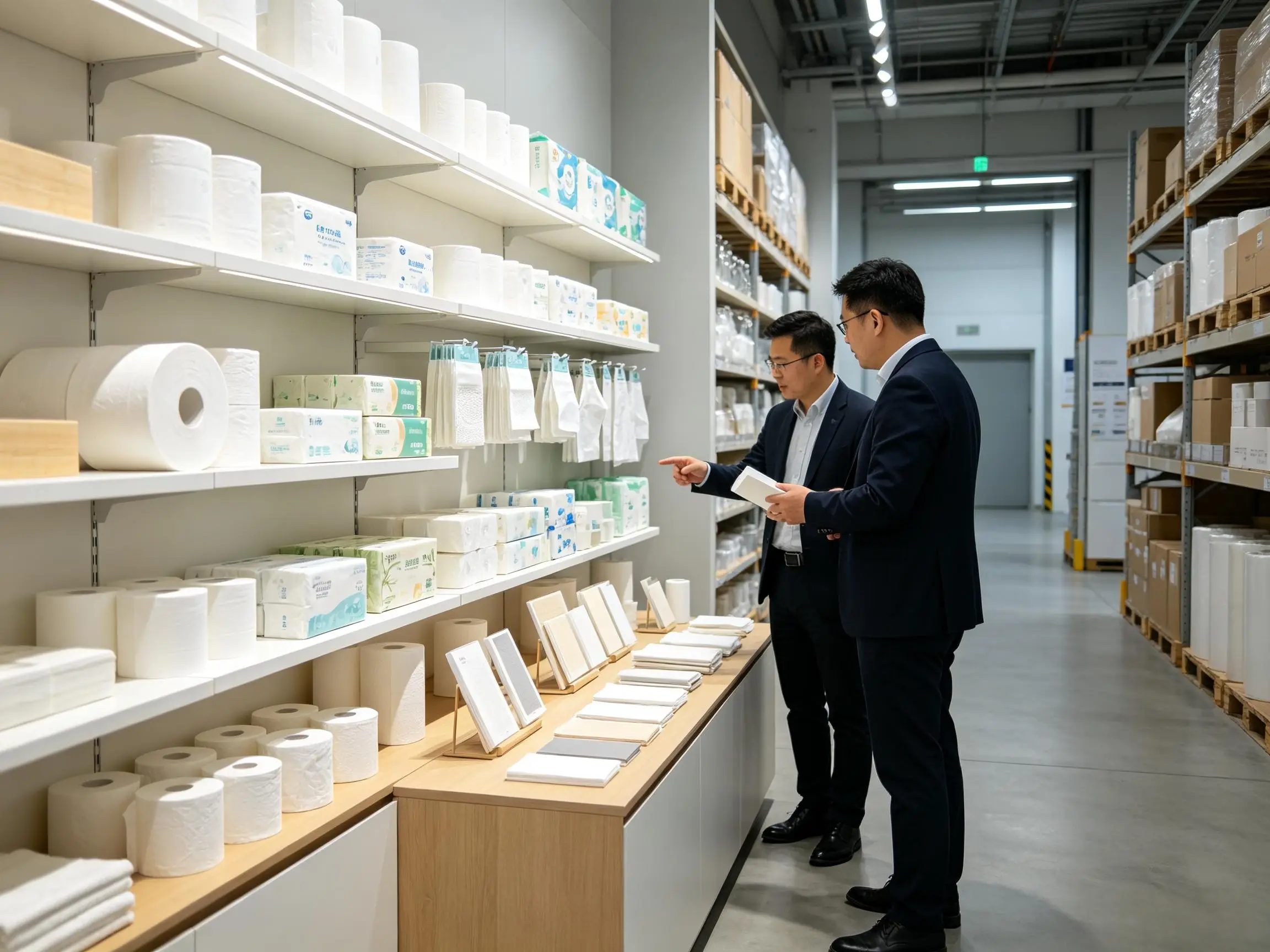
Choosing the right tissue supplier is an important decision for importers, wholesalers, retailers and distributors. Tissue paper may seem like a simple everyday product, but differences in raw materials, specifications, production capacity, packaging and quality control can have a significant impact on product performance, supply stability and overall business costs.
For importers looking for a long-term tissue paper supplier, price should not be the only consideration. A reliable supplier should be able to provide consistent quality, stable production, flexible customization and dependable delivery while understanding the requirements of different markets.
Here are the key factors importers should consider when choosing a tissue supplier.
1. Manufacturing Experience and Factory Capability
The first step is to understand whether the supplier is an actual manufacturer or simply a trading company.
An experienced tissue paper manufacturer should have suitable production facilities, production lines, quality control procedures and sufficient capacity to handle both regular and large-volume orders.
Factory capability becomes particularly important as your business grows. A supplier may be able to provide samples and small orders, but the real test comes when you need multiple containers on a regular basis.
When evaluating a supplier, consider their manufacturing experience, production lines, monthly supply capacity, quality management system and ability to support long-term orders.
An established manufacturer can also provide more direct communication between product development, production and quality control, helping make the entire sourcing process more efficient.
2. Raw Materials and Product Quality
The quality of tissue paper starts with its raw materials.
Different tissue products can use different types and grades of pulp or fiber materials, including virgin wood pulp, recycled pulp and renewable fiber resources such as bamboo.
Importers should understand exactly what materials are used and whether they match the target market and product positioning.
For example, premium facial tissue may require a softer and smoother material, while commercial toilet paper may focus more on cost efficiency, strength and roll capacity. Kitchen paper may require higher absorbency and wet strength, especially when it is intended for cleaning or food-related applications.
Before placing an order, discuss your target market, expected price range, product positioning and intended use with your supplier. This allows the manufacturer to recommend suitable materials and product options rather than simply offering a standard product.
3. Product Specifications and Customization
Different markets have different expectations for tissue products.
Important specifications may include:
- Ply
- Sheet size
- Sheet count
- Roll length
- Roll diameter
- Core size
- Embossing
- Packaging format
- Material composition
For OEM and private label buyers, customization is even more important.
A capable supplier should be able to adjust product specifications according to the customer’s target market, price range, packaging requirements and intended application.
Instead of offering only fixed products, an experienced OEM manufacturer should help customers find a suitable balance between quality, performance and cost.
If you already have a specific market or product positioning in mind, you can provide your target market, expected price range, packaging requirements and intended use. This information allows the supplier to recommend products that better match your needs.
4. OEM and Private Label Capabilities
For importers building their own tissue brand, OEM capability can be a major advantage.
Private label tissue products allow distributors, retailers and brands to sell products under their own brand name rather than relying entirely on an existing manufacturer brand.
A capable OEM supplier should be able to support more than simply printing a logo on packaging.
Our OEM services include product specification selection, material options, embossing, sheet count, packaging design, printed bags or boxes and customized production.
Before placing an order, importers should confirm the supplier’s MOQ, packaging requirements, artwork process, sample approval procedure and production lead time.
A clear OEM process can help reduce communication problems and ensure that the final product matches the original requirements.
5. Production Capacity and Supply Stability
Supply stability is critical for wholesalers and distributors.
If a product becomes popular in the market but the supplier cannot maintain production, the importer may face stock shortages, delayed deliveries and lost sales.
When evaluating a supplier, consider their production capacity and ability to handle recurring orders. It is also useful to understand the number of production lines and the supplier’s monthly supply capacity.
We maintain stable raw material sourcing and large-scale production capabilities, with a monthly supply capacity of 30,000+ tons. Once an order is confirmed, our production team can promptly arrange production according to the agreed schedule.
For long-term cooperation, stable supply and reliable production planning can be just as important as competitive pricing.
6. Quality Control and Import Compliance
Consistent quality is essential for tissue products because customers expect every order to meet the agreed specifications.
Quality control should cover raw materials, production processes, finished products and packaging.
Importers should also consider whether the supplier can provide relevant product documentation, testing reports or certificates required by the destination market.
We can provide professional guidance based on the product and target market, helping customers identify potential testing, documentation, customs or certification requirements at an early stage. This can help reduce unexpected issues during the import process.
For large orders, customers may also want additional quality confirmation before shipment. If required, we can arrange finished-product samples after production for customer review and approval before the goods are shipped.
This provides an additional opportunity to confirm that the final products meet the agreed requirements.
7. Packaging and Shipping
Packaging is another important factor, especially for private label products.
Tissue products can be supplied in plastic bags, paper boxes, cartons and other customized packaging formats. Packaging should protect the products during transportation while also meeting the requirements of the target market.
Importers should also consider container loading efficiency. Because tissue products are relatively bulky, transportation costs can have a significant impact on the final landed cost.
We mainly use ocean freight for international shipments to help manage transportation costs. We also work with experienced freight partners to provide efficient shipping solutions for customers who need support with logistics.
Based on the order quantity and destination, we can help plan the shipping schedule and coordinate the overall timeline from production to shipment, allowing customers to better manage their inventory and sales plans.
8. Sustainability and Material Options
Sustainability is becoming increasingly important in the global tissue market.
Importers may be looking for products made from renewable resources, responsibly sourced pulp or recycled materials. Packaging choices are also receiving more attention.
Virgin wood pulp can provide softness and reliable performance, while bamboo and other renewable fibers may offer additional options for sustainability-focused product lines.
However, importers should look for specific and verifiable information rather than relying only on general environmental claims.
A responsible supplier should be able to explain material sources, product specifications and available sustainability-related certifications or testing.
When developing a tissue product, buyers should consider not only the environmental positioning but also the product’s actual performance, target market and overall cost.
9. Communication and Long-Term Cooperation
Finally, communication should not be underestimated.
International tissue orders often involve product specifications, packaging artwork, samples, shipping arrangements and production schedules. Clear communication can prevent misunderstandings and reduce unnecessary delays.
A good supplier should provide accurate information, respond clearly and communicate potential issues in advance.
The best supplier for your business is not necessarily the one offering the lowest initial quotation. What matters is whether the supplier can consistently provide the required product quality, stable supply, reliable delivery and professional support.
Conclusion
Choosing a tissue supplier is a long-term business decision. Importers should evaluate the complete supply chain rather than comparing prices alone.
Manufacturing experience, raw materials, product quality, customization, production capacity, quality control, import compliance, packaging, logistics and sustainability should all be considered before placing an order.
For importers, wholesalers and retailers developing their own tissue products, working directly with an experienced OEM manufacturer can make product development and supply management much easier.
At Tissuego, we provide OEM, private label and wholesale tissue paper solutions for customers worldwide. With more than 16 years of manufacturing experience, 15 production lines and a monthly supply capacity of 30,000+ tons, we support customers from product selection and customization to production and shipment.
Whether you are looking for standard tissue products or developing a customized product for your own market, we welcome inquiries from customers around the world.
Tell us about the product you are interested in, your target market, product positioning, specifications or customization requirements. We will be happy to provide more information and work with you to develop a suitable tissue paper solution for your market.
Let’s build better tissue products and grow together.